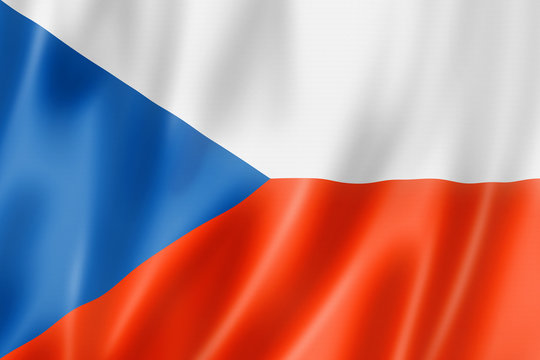
Situated at the very centre of Europe, Czechia (the Czech Republic) forms a very attractive mixture of ancient history, marvellous architecture, and a strong and contemporary economy. To a large number of expatriates, what started as a temporary job or a year of exploration turns out to be a long-term need to establish roots. The ambition of these people is usually to acquire permanent residency. This provides these people with a sense of stability and rights that seem to be equal to the citizenship of the Czech Republic, without having to surrender their original passports. The process of temporary visa move to permanent settlement is, however, a long process requiring a lot of planning and patience.
Learning permanent residency
To begin with, it is important to tell the difference between permanent residency, long-term visas and long-term residency permits. Work, study, family reunification. First-time stays in most cases, first-time work, study or family reunification is granted as a long-term visa (more than 90 days) or a long-term residence permit (with limited purposes such as employment). Another category is permanent residency, so-called Povoleni k trvalemu pobytu. It is aimed at those who have already settled down in Czechia and led a continuous and lawful existence in the country over an extended period of time. It is a major victory, and you are now granted most of the same rights as a Czech citizen. Such as the right to free access to the labour market, the right to freely start a business, and access to a range of state social support and benefits. The major one is the right to vote during the national elections.
Qualifications and essentials
Continuous residence is the most frequently used path to permanent residence. The only condition is that you must have resided legally in Czechia consecutively for a stretch of five years. This does not imply that you can not go on holidays; what it implies is that in a period of five years. Which are recorded in your residence permits, your main place of residence has been in the Czech Republic.
In addition to keeping time on a calendar, the Ministry of the Interior also examines many essential criteria when you are applying:
Stable Income
You need to show that you have a stable and reasonable income that would maintain you and any family members. There are no fixed monthly amounts, and it is usually supposed to have at least the level of the Czech subsistence minimum (which changes every year). This is established by the use of an employment contract, bank statements, tax returns, and the verification that the person has income, as certified by the Czech Social Security Administration.
Accommodation
You should give evidence of legal accommodation. This implies a rental agreement (with evidence that your landlord has registered you with the authorities) or evidence of property ownership. The area should be sufficient for you and your family.
Health insurance
You will need to be fully insured by a Czech licensed healthcare company for five years. The standard is public insurance (VZP, VoZP, etc.), which is normally connected to employment. Privacy of insurance is possible as long as they comply with minimum legal standards, whereas the government clearly prefers a public perspective.
Integration and language
Although this is not necessarily a formal and tested condition of the five-year route, evidence of integration is gaining momentum. This may involve proving the understanding of the Czech language, society and culture. Other routes (such as those of family members of the EU citizens) require an A1-level Czech language test. An active study of the language can be of great help to your application and everyday life.
Clean record
A clean criminal record, in Czechia and the home country, is necessary. The Czech Criminal Records registry will have to be supplied with an extract, and in most cases, a foreign apostilled or superlegalised criminal record check will be required of you as well.
Application process
The permanent residency application is made physically at an office at the Ministry of the Interior (also known as foreign police or cizinecka policie) based on the place of residence. The demand is too great, which can make it difficult to book an appointment, and it is necessary to monitor the booking system through the Internet.
The trick to a smooth application is good documentation. You shall be required to fill out the formal application form and submit:
- Your existing passport and long-term residence permit.
- Evidence of accommodation (a signed contract and registration confirmation).
- Income evidence of the past few months or the past tax year.
- Health insurance confirmation.
- Criminal record checks.
- Passport-sized photographs.
- Administrative stamps ( kolky) in a certain value (now CZK 2,000).
The processing time may be long, as it usually takes six months or a year. In the course of this time, your current long-period residency permit stays on. You should not go to Czechia without staying for a long time, as the application process may be considered a violation of your continuous residence.
Life after being granted permanent residence: Rights and responsibilities
When you have the biometric card in your hand, a whole different freedom starts. You no longer have to renew your permit on a one or two-year basis. Although the card expires after a period of 10 years, you have an indefinite period of permanent residency; you just have to renew the physical card after 10 years.
Your rights become greatly increased. You can shift jobs or get unproductive without necessarily putting your position at risk (but prolonged unemployment might have an impact on the benefit claims). You can have easier access to the public health insurance system, and you get the right to file many family benefits. Flat rates and pension fund contributions, just like the citizens of the Czech Republic.
Along with such rights, there are duties. It is your duty to notify the authorities in case of a change of address within 30 days. More importantly, your permanent residency may be cancelled in case you do not stay in Czechia for more than two years in a row. Or you are discovered to have acquired it by fraud.
Conclusion
Getting permanent residence in Czechia is not only a burdensome administrative challenge but also a sign of your successful assimilation into the Czech society. The journey entails hard work, financial security, and the true desire to call the country home. The bureaucracy might be overwhelming, but the payoff is massive: the safety to establish a long-term future in a stable, successful, and culturally diverse European country. To the people who take this ride, it is not only a plastic card but that special inner peace of being part of something that is very much real.
You can also view these posts:
Frequently Asked Questions on Czechia
Relocation guide to Czechia